

Total Hip Replacement Surgery – Restore Mobility & Live Pain-Free
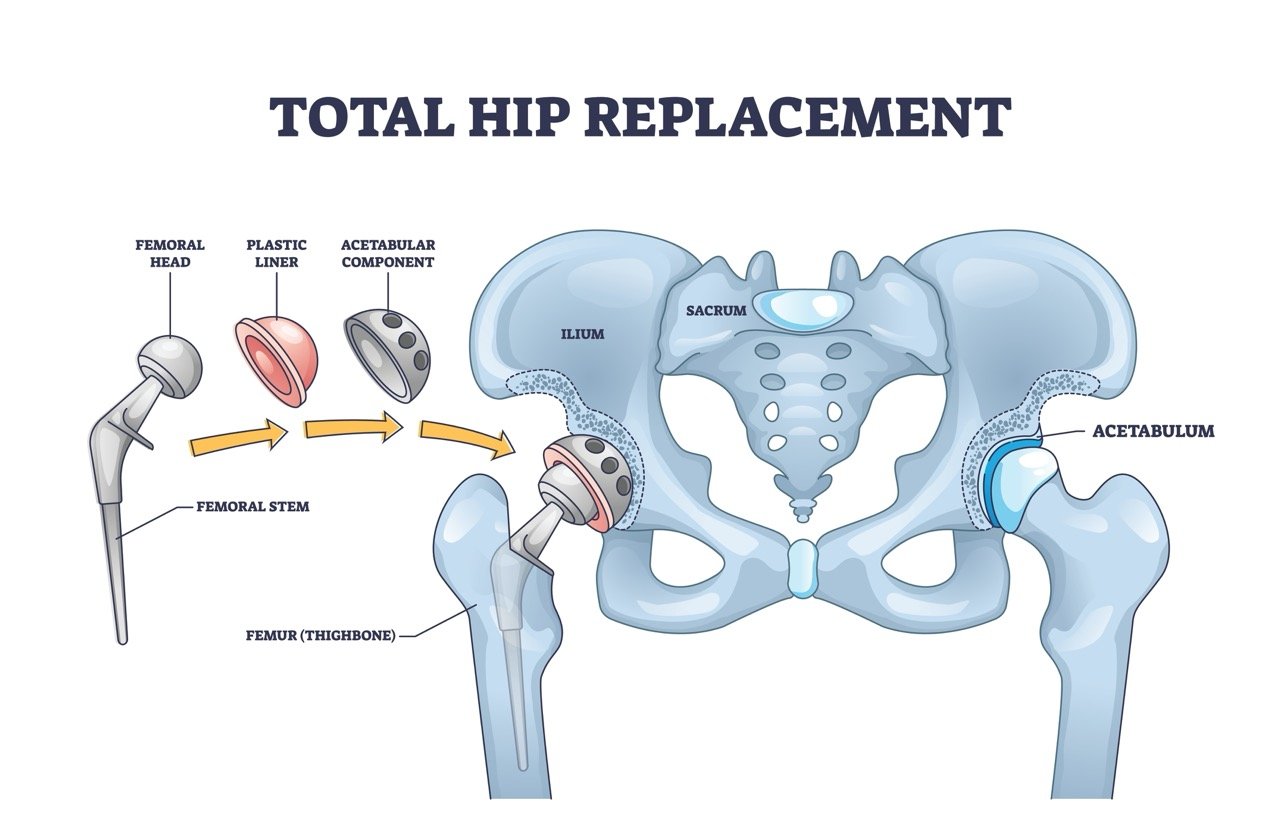
What is Total Hip Replacement?
Why Do You Need a Hip Replacement?
Many conditions can damage the hip joint. Therefore, doctors recommend hip replacement when non-surgical treatments no longer provide relief.
Common Causes Include:
- Osteoarthritis (wear and tear of joints)
- Rheumatoid arthritis (autoimmune condition)
- Avascular necrosis (loss of blood supply to bone)
- Hip fractures or injuries
- Congenital hip deformities
Initially, patients try medications, physiotherapy, and lifestyle changes. However, when pain persists and affects daily life, surgery becomes the best option.
Symptoms That Indicate You May Need Surgery
You should consider consulting an orthopedic specialist if you experience:
- Persistent hip or groin pain
- Difficulty walking or standing
- Stiffness in the hip joint
- Pain even during rest or sleep
- Reduced range of motion
Moreover, if your condition limits your independence, immediate medical attention is necessary.
Benefits of Total Hip Replacement
Total Hip Replacement offers life-changing benefits. Not only does it relieve pain, but it also restores function and mobility.
Key Benefits:
- Significant pain relief
- Improved joint movement
- Better quality of life
- Increased independence
- Long-lasting results
In addition, most patients return to normal activities within a few months.
Types of Hip Replacement Procedures
Depending on your condition, your doctor may recommend different surgical approaches.
1. Traditional Hip Replacement
In this method, the surgeon makes a larger incision to access the joint. Although effective, recovery may take slightly longer.
2. Minimally Invasive Hip Replacement
This technique uses smaller incisions. Therefore, it results in less pain, minimal scarring, and faster recovery.
3. Partial Hip Replacement
Instead of replacing the entire joint, the surgeon replaces only the damaged portion. This option is usually suitable for specific fractures.
4. Revision Hip Replacement
If a previous hip implant fails or wears out, surgeons perform a revision surgery to replace it.
Step-by-Step Procedure
Understanding the surgical process helps reduce anxiety. Therefore, here is a simple breakdown:
Step 1: Preparation
Before surgery, doctors perform blood tests, imaging scans, and overall health evaluations.
Step 2: Anesthesia
The anesthesiologist administers either general or spinal anesthesia to ensure a pain-free procedure.
Step 3: Removal of Damaged Joint
The surgeon removes the damaged cartilage and bone from the hip joint.
Step 4: Implant Placement
Next, they insert the artificial socket into the pelvic bone and attach the prosthetic ball to the thigh bone.
Step 5: Closure
Finally, the surgeon closes the incision and transfers the patient to recovery.
Recovery After Hip Replacement
Recovery plays a crucial role in achieving successful results. Therefore, following medical advice is essential.
Immediate Recovery
Patients usually start walking with support within 1–2 days after surgery.
Physical Therapy
Physiotherapy begins soon after surgery. It helps restore strength and mobility.
At-Home Care
Patients must follow precautions like avoiding sudden movements and maintaining proper posture.
Full Recovery Timeline
- 2–4 weeks: Resume light activities
- 6–12 weeks: Improved strength and mobility
- 3–6 months: Near complete recovery
Advanced Technology in Hip Replacement
Modern orthopedic surgery uses advanced technology to improve outcomes.
Innovations Include:
- Computer-assisted surgery
- Robotic-assisted hip replacement
- High-quality durable implants
- Minimally invasive techniques
As a result, patients experience faster recovery and better long-term results.
Frequently Asked Questions (FAQs)
1. How long does a hip implant last?
➤ Most implants last 15–25 years, depending on usage and care.
2. Is hip replacement painful?
➤ No, anesthesia ensures a pain-free procedure. Post-surgery pain is manageable with medication.
3. When can I walk after surgery?
➤ Patients usually start walking within 24–48 hours with support.
4. Can I climb stairs after surgery?
➤ Yes, with proper guidance and physiotherapy, you can gradually resume stair climbing.
5. Is the surgery safe?
➤ Yes, with modern techniques and experienced surgeons, it is a highly safe procedure.