Joint pain and mobility issues can significantly affect your quality of life. However, with advancements in medical technology, treatments like arthroscopy and arthroplasty offer effective solutions for various joint conditions. Whether you are dealing with sports injuries, arthritis, or chronic joint pain, these procedures help restore function and reduce discomfort.
Most importantly, early diagnosis and timely treatment can significantly improve your quality of life. So, if you are experiencing persistent joint pain or mobility issues, consult a specialist today.
With the right treatment and proper care, you can regain mobility, reduce pain, and return to an active lifestyle.
What is Arthroscopy?
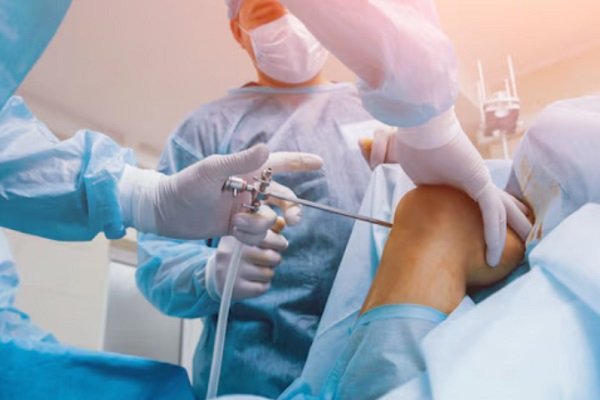
Arthroscopy is a minimally invasive surgical procedure used to diagnose and treat joint problems. During this procedure, a surgeon inserts a small camera, called an arthroscope, into the joint through tiny incisions.
As a result, the surgeon can clearly view the inside of the joint and perform necessary repairs without making large cuts.
Common Conditions Treated with Arthroscopy
Arthroscopy effectively treats several joint-related issues. These include:
Torn ligaments (such as ACL injuries)
Meniscus tears in the knee
Shoulder impingement
Cartilage damage
Joint inflammation
Loose bone fragments
Moreover, doctors often recommend arthroscopy when non-surgical treatments like medication or physiotherapy fail to provide relief.
What is Arthroplasty?
On the other hand, arthroplasty refers to joint replacement surgery. In this procedure, damaged parts of the joint are replaced with artificial implants made of metal, plastic, or ceramic.
Unlike arthroscopy, arthroplasty is usually recommended for severe joint damage, especially due to arthritis.
Types of Arthroplasty
There are several types of arthroplasty procedures, such as:
Knee replacement (Total or Partial)
Hip replacement
Shoulder replacement
Elbow joint replacement
Therefore, this procedure is ideal for patients experiencing chronic pain and limited movement that affects daily life.
Key Differences Between Arthroscopy & Arthroplasty
Although both procedures treat joint problems, they differ significantly:
Feature
Arthroscopy
Arthroplasty
Procedure Type
Minimally invasive
Major surgery
Purpose
Repair joint
Replace joint
Recovery Time
Faster
Longer
Ideal For
Mild to moderate issues
Severe joint damage
Thus, your doctor will recommend the appropriate treatment based on your condition.
Benefits of Arthroscopy
Arthroscopy offers several advantages. First of all, it is less invasive, which means:
Smaller incisions
Minimal scarring
Reduced pain after surgery
Additionally, patients experience:
Faster recovery time
Lower risk of infection
Short hospital stay or same-day discharge
As a result, many patients prefer arthroscopy for early-stage joint problems.
Benefits of Arthroplasty
Although arthroplasty is a major surgery, it provides long-term relief. In fact, it is often the best solution for severe joint conditions.
Key benefits include:
Significant pain reduction
Improved joint mobility
Enhanced quality of life
Long-lasting results (10–20 years)
Furthermore, modern implants are highly durable, making arthroplasty a reliable option.
Arthroscopy Procedure – Step-by-Step
Understanding the procedure can help reduce anxiety. Here’s how arthroscopy works:
Preparation: The patient receives anesthesia.
Small Incision: The surgeon makes tiny cuts around the joint.
Insertion of Arthroscope: A camera is inserted to view the joint.
Treatment: Surgical tools repair damaged tissues.
Closure: Incisions are closed with stitches.
Typically, the procedure takes 30 minutes to 2 hours, depending on complexity.
Arthroplasty Procedure – Step-by-Step
Arthroplasty involves a more detailed process:
Anesthesia: General or spinal anesthesia is administered.
Incision: A larger incision is made over the joint.
Removal of Damaged Tissue: The surgeon removes worn-out cartilage and bone.
Implant Placement: Artificial joint components are fixed in place.
Closure: The incision is stitched and dressed.
Usually, the surgery lasts 1 to 3 hours.
Recovery After Arthroscopy
Recovery after arthroscopy is relatively quick. In most cases:
Patients go home the same day
Mild pain and swelling occur initially
Physical therapy starts early
Moreover, most people return to normal activities within 2 to 6 weeks.